Mehr dazu in engl. Sprache
An upper air pattern known as an
Omega Block is developing over North America this week. This pattern will bring prolonged heat to the Prairies, while areas near the Pacific and Atlantic coasts will experience cooler, unsettled weather. To understand how this pattern will influence our weather, it helps to first look at the jet stream.
Understanding the jet stream
High in the atmosphere, fast-moving rivers of air called
jet streams flow around the planet, separating warm and cool air masses. Jet streams usually follow a wavy path that changes over time, as weather systems move from west to east.
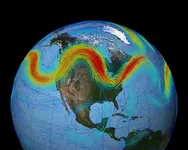
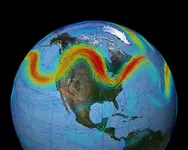
Visualization of the jet stream in the upper atmosphere, flowing along a wavy path. Credit: NASA.
When the jet stream is strong, weather systems tend to move quickly. But when it slows down and becomes wavier, weather patterns can become “stuck” – like an atmospheric traffic jam.
What is a blocking pattern?
A blocking pattern happens when the jet stream slows down and becomes wavier. This can create persistent areas of high and low pressure that block the normal movement of weather systems and force them to follow a different path. Blocking patterns can lead to extreme weather. Areas under strong high pressure may see many days of hot, dry weather, increasing the risk of heat waves and worsening drought. Meanwhile, areas near low-pressure troughs can experience prolonged unsettled weather and heavy rainfall, which may lead to flooding.
An omega block forms when a strong ridge of high pressure becomes trapped between two troughs of low pressure. The jet stream then takes on a shape similar to the Greek letter omega (Ω), which is where the pattern gets its name.
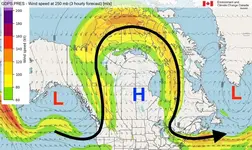
Weather model output showing jet stream winds in the upper atmosphere over Canada later this week, revealing an omega block pattern. The shape of the jet stream resembles the Greek letter omega (Ω).
How the omega block will affect the weather
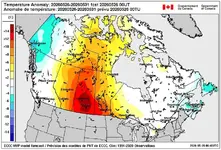
The centre of this omega block will set up over the middle part of the country this week, bringing well above-normal temperatures. Record-breaking heat is possible across parts of the Prairies and nearby areas of the North. It will also feel humid at times in the Prairies this week. The prolonged heat will also increase wildfire danger in areas where little or no rain falls.
At the same time, cooler-than-normal conditions are expected in the Yukon and parts of British Columbia, as well as across much of eastern Canada later in the week. Above-normal precipitation is also likely in parts of British Columbia and the western Prairies, where severe thunderstorms may develop at times. Parts of Quebec and the Maritimes are also expected to see wetter-than-normal conditions.
6-day forecast of temperature anomaly (difference from normal), from May 26-31, across Canada. This same wavy jet stream pattern is also affecting other parts of the Northern Hemisphere. Across the Atlantic, a strong blocking ridge continues to bring record-breaking heat to parts of western Europe.